Seam & crack repair
Split tape, diagonal cracks off door corners, nail pops running down a stud. Retaped, refilled, refinished.
Seams that split over the winter, ceilings stained after a storm, holes from doorknobs and moving day. One call gets it booked, patched, textured to match the room and handed back primed.
Quote first, work second. You hear the price, then decide.
Ring once; the job is handed to a drywall contractor out this way, and you get the quote before a thing is touched.
Call 7 days, 7am–9pm
Five short fields and you're in the queue.
Press send and both the local contractor pricing this job and Chadron Drywall Repair may follow up on your phone about this job, by voice or by text. Privacy
What follows: the drywall contractor who covers your town rings you, gets the particulars and comes back with a number.
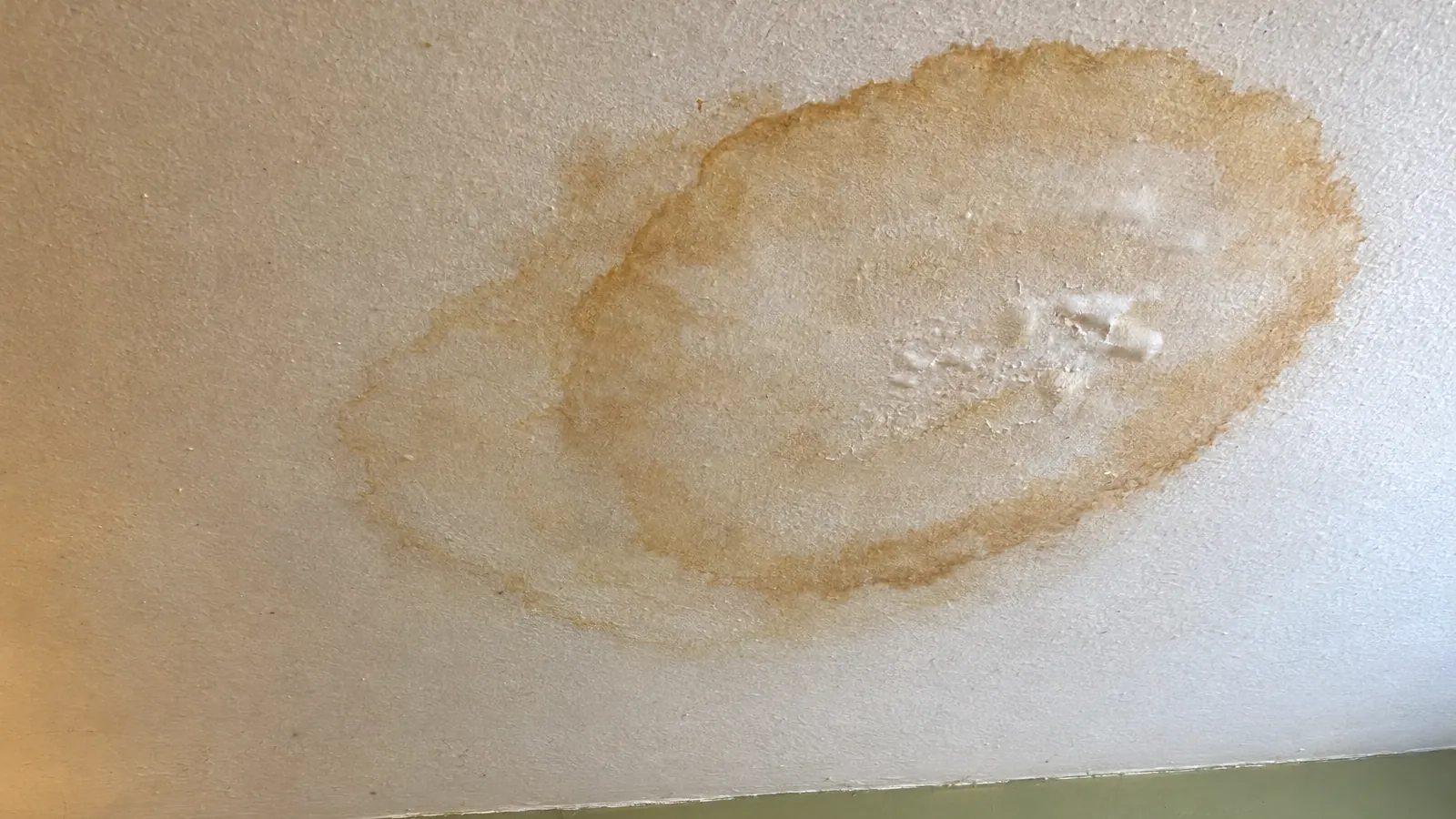
Record the damage first, while all of it is still there. Insurance adjusters, landlords and property managers often ask for it later, and a stain under fresh primer can't be photographed.
Hail does hit here. NOAA storm reports logged 1.5-inch stones just west of town, 5 miles out, in late June 2025, with a 64 mph gust at the airport weather station in the same storm. A shingle cracked that day can let rain through weeks afterward, so write down the storm date even if the ring appeared later.
Renting? Of 2,097 occupied homes in Chadron, Census estimates mark 919 as renter-occupied. Email your photos and notes to the landlord and keep copies. What a policy pays is for your insurer to say; this is just the paper trail.
Ceiling bulging or dripping? At the breaker box, kill every circuit feeding a fixture in that patch of ceiling first. Then get everyone out of the room below, set a bucket down and call.
Sometimes. Age decides what's under the paint, and in Chadron the age shifts from block to block.
The Chadron Commercial Historic District (National Register, 2007) covers buildings from 1888 to around 1950. Hotel Chadron, at 115 Main, went up in 1890 in the Italianate style. Upstairs rooms and back rooms of that vintage were plastered, and plenty have been patched with board over the decades. Step one there is working out which surface you have, because each takes a different fill.
The Dawes County Courthouse, an Art Deco building between Fourth and Fifth, dates from 1935. Houses on the surrounding blocks come from several decades. Look up your year built on the county assessor record before calling: pre-1940s usually points to plaster, 1950s onward usually to gypsum board.
Census estimates place 884 of Chadron's 2,456 homes in the built-1939-or-earlier group. That's a lot of framing that has settled, dried out and been reworked more than once.
Four kinds of work. Pick the nearest match; the quote call sorts out the rest.
Split tape, diagonal cracks off door corners, nail pops running down a stud. Retaped, refilled, refinished.
Hail-cracked roofs, snowmelt dammed up by eave ice, a leaking bath upstairs. Rings sealed, soft board replaced.
Knockdown, orange peel, smooth, popcorn or skip trowel, rebuilt so the patch belongs to the surface around it.
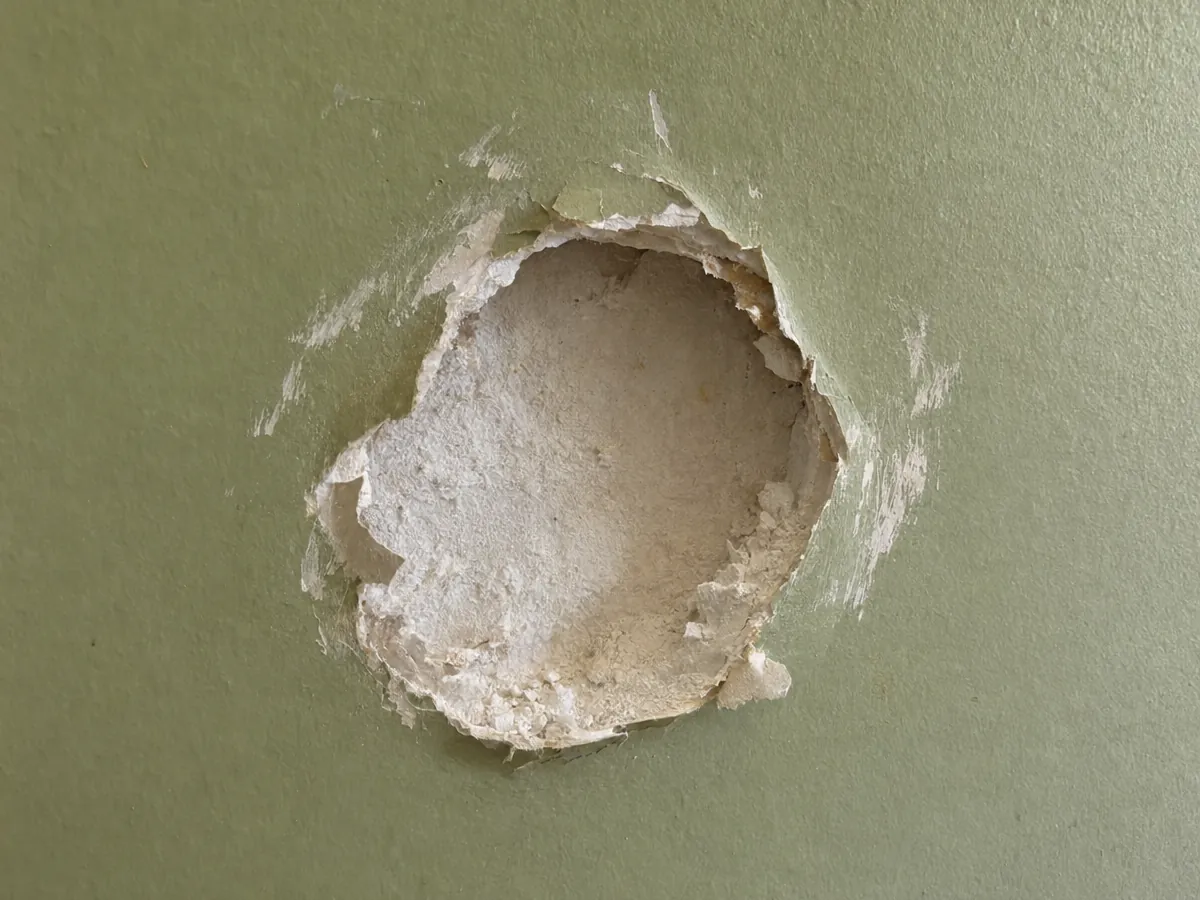
Doorknob strikes, anchors pulled out, move-out gouges, plumber's openings. Backed, patched, sanded, primed.
Three surfaces turn up behind the paint here: gypsum board, plaster over wood lath, and the vinyl-faced panels found in many manufactured homes. Census estimates count 82 mobile homes within city limits, next to 1,787 detached houses.
Walls usually take 1/2-inch sheets. Ceilings often get 5/8-inch, which sags less between joists, and wet rooms sometimes get a moisture-resistant sheet. A patch has to match the thickness around it, or it stands proud or sinks into a dip.
Setting compound is sold dry, in bags, gets mixed with water and hardens through a reaction with that water instead of by evaporation, so it suits deep fills, plaster and first coats on a seam. Premixed all-purpose and lighter topping muds go on last because they sand smooth.
Knockdown, orange peel, smooth walls, skip trowel and older popcorn ceilings each call for their own method. A good match gets tried on scrap board first, then sprayed or troweled to blend into the old pattern. More on how each texture is copied.
Chadron's housing runs old. Census estimates put the median year built at 1953, and the tallest bar in the chart is homes from 1939 or earlier.
Plaster grips wood lath through keys squeezed between the strips. When keys snap, a section bulges or cracks loose. The right fix screws it back to the lath with plaster washers, then fills with setting compound rather than spackle.
Drywall hung in the 1950s and '60s was usually nailed. Nails back out as framing dries, leaving a line of small round bumps down a stud. Each one is reset with a screw and spotted over.
Diagonal cracks climbing from the top corners of doors and windows point to framing that has shifted. If one keeps reopening, the joint needs reinforcing tape, not another skim.
EPA guidance flags houses built before 1978 as more prone to lead-based paint. Sanding or cutting through those layers should follow EPA lead-safe methods, so ask what dust containment is planned before work starts.
Tell us the room, the size and whether it's wall or ceiling. A picture by text cuts out a round of back-and-forth.
We go through your notes and photo, ask about anything missing and hand the job to a drywall contractor whose route covers your street.
The contractor rings, gets the details and quotes. No yes, no work.
Once you agree, the job gets a date. Drying between coats can spread a repair over more than one day; ask about that when you book.
Damaged material is cut back, the opening backed, taped and coated, then textured to match the wall.
The patch is sanded smooth and primed, or painted as well, if you asked for paint in the quote.
The same path, in a little more detail, is on the page about this business.
Drawn to scale against an 80-inch door: nail hole, doorknob hole, half sheet, full sheet.
National numbers first, as a yardstick and not a quote. Fixr's national drywall pricing page, last updated January 2025, lists a typical hole repair at about $60 to $200, a crack at $60 to $330, and water damage in a single room, walls or ceiling, at around $400 to $800. All three are U.S.-wide figures; none of them sets the Chadron price. The actual figure comes from the contractor quoting your job, once the damage has been talked through.
For the long version, read the guide to what drives a drywall quote.
That's called flashing. Raw joint compound soaks in paint unevenly compared with painted board, so the patch dries duller or glossier and catches the light from a window.
A coat of primer over the repair evens out how it absorbs. Water rings call for a stain-sealing primer (shellac or alkyd), formulated to lock the brown ring in; a latex coat alone often lets it creep through.
Color is half of it. Flat, eggshell and satin bounce light differently, and the patch needs the same finish as the wall.
A quote may end with primer or carry on through paint. Say which you want when you call. Keep whatever paint is left from that room; the label tells the contractor what's on the wall. For the cleanest look, repaint the full wall edge to edge; spot-touching the patch tends to show.
Chadron first, then out along the highways in every direction.
Ring it in, text a snapshot, or post the details through the request page. All three open the same booking.
The contractor assigned to your repair calls back with questions, then a figure.